


Tabelog - Food Guide in Japan
4.923.00 Reviews
App Specs
- Version
- 2.17.0
- Updated On
- License
- Free
- Downloads
- 500,000+
- Developer
- Kakaku.com, Inc.
- Categories
- Food & Drink
- Platform
- Android
Screenshots
 Analysis by AppCompare
I find a restaurant guide most valuable at the moment when plans stop being tidy: a train journey runs late, the weather turns, or everyone in the group suddenly wants something different. That is the situation where Tabelog - Food Guide in Japan can be useful. It is a Food & Drink app from Kakaku.com, Inc., focused on helping people explore places to eat around Japan. I’d treat it as a research companion rather than a promise that every meal will be effortless: it can help narrow the options, but choosing well still takes a little judgement.
When a connection changes the search
Restaurant discovery depends on having useful information at the right time. At home or in a hotel, I can compare several candidates without pressure; on a busy street, I may only have a few minutes to decide. The app’s search and map can make that second situation more manageable, but checking details while moving around naturally depends on a working connection. I’d shortlist a few possibilities before setting off rather than assume I can do all my planning in the middle of a crowded station.
Connectivity matters especially when I’m trying to verify a practical detail just before visiting. Opening hours, menus, photos, and a restaurant’s own website can help me decide whether a place fits the moment, but those details are only useful if I can load them. I also wouldn’t treat an old screenshot or remembered listing as a guarantee that a restaurant is open now. My routine would be to check the likely choice shortly before leaving, then keep a nearby alternative in mind.
Useful on foot, less comfortable in a rush
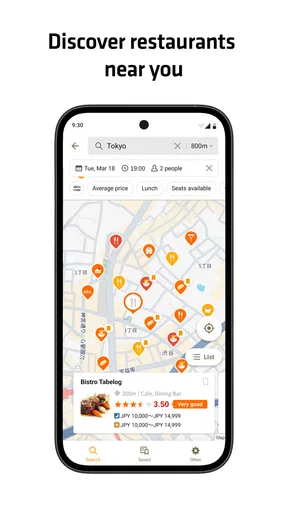
For a visitor walking through an unfamiliar neighborhood, the map view has a clear job: it helps connect the search to the streets around me. I can look for a place within a sensible walking distance instead of choosing an appealing result that turns out to be inconvenient. Still, I’d pause somewhere safe to compare listings rather than trying to read reviews while crossing roads or navigating a crowded platform. The app is best used as a decision aid, not as a reason to keep staring at a phone while walking.
It can also suit slower planning. Before a day trip, I can search around the area where I expect to be and note a few types of food I’d be happy with. That is more resilient than building the entire day around one restaurant. If the first choice is busy, closed, or simply not what I feel like eating, a second option nearby can save time. This small habit is particularly helpful when traveling with someone who has different tastes or needs more time to decide.
Recovering when the plan stalls
If a result will not load, I’d avoid repeatedly refreshing it while standing in the middle of a busy street. I’d first move to a calmer spot and try again, then fall back on a place I had already noted or a nearby option I can identify from the map. This is not a guarantee that the app can solve a connectivity problem; it is a practical way to avoid letting one stalled search derail a meal. For an important reservation or a tight schedule, I’d confirm the plan through the restaurant’s own channel where possible.
There is also a judgement call in how much to trust any single review. A glowing comment may reflect one diner’s preferences, while a low score may focus on something that would not matter to me. I’d look for repeated themes across comments and photos, then weigh them against the menu, location, and occasion. That approach makes the community useful without treating it as an infallible verdict.
Worth Reading Before You Choose

Baby Panda World Brings Quick Play to Modern Phones, but Its Game Library Feels Busy

ESPN’s Live Game View Makes Following Close Games Easier

QuizzLand Review: A Good Fit for Short Trivia Breaks, Not Every Player

Basketball Stars: Multiplayer Is Fast, but Can It Recover When Matches Go Wrong?

WEBTOON Turns Phone Updates Into a Better Reading Routine

Link to Windows Runs on Shared Habits, Not Social Feeds
Keeping browsing focused
For data-conscious use, I’d keep searches purposeful: choose an area, narrow the food or price preferences, and open only the few listings that look plausible. That is more efficient than browsing endlessly while out and about, and it also makes the decision easier. If I know the neighborhood in advance, doing the broad comparison over a reliable connection before leaving is a sensible habit. I’d still recheck time-sensitive details when I’m ready to go.
The app is free, rated for Everyone, and has an average rating of 4.9 from around 2.3 thousand ratings, with 500 thousand or more installs. It was released on November 3, 2025, and version 2.11.0 is the current version. Those figures suggest that it has attracted a substantial audience, though popularity alone cannot tell me whether a particular restaurant will suit my taste. I’d use the app’s listings as a starting point and make the final call based on the actual details and my needs.
Discovering the Best Eateries
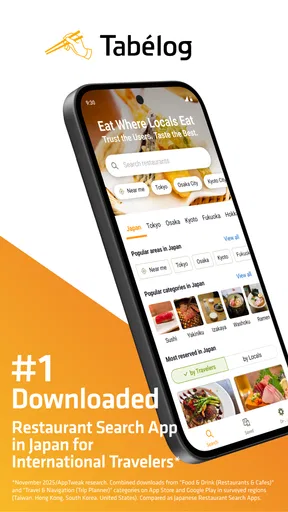
So, what's the deal with Tabelog? Essentially, it’s a comprehensive food guide that helps you find restaurants across Japan. Whether you're in bustling Tokyo or a serene countryside town, this app has got you covered. It features reviews and ratings from locals, which, in my opinion, is the best way to find hidden gems.
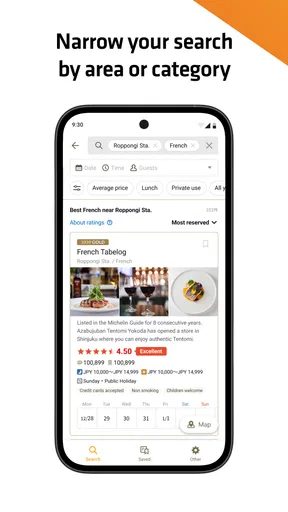
One of the coolest features? The app sorts restaurants by popularity, which is perfect if you're looking to hit up trending spots. You can also filter by cuisine type, price range, and even specific dishes. Talk about convenience!
Navigation and User Experience
Let's talk about how easy it is to navigate. The interface is clean and intuitive, which means you won’t be fumbling around trying to figure things out. You can search using keywords or use the map feature to see what's nearby. I found the map particularly helpful when I was hungry and didn’t want to venture too far.
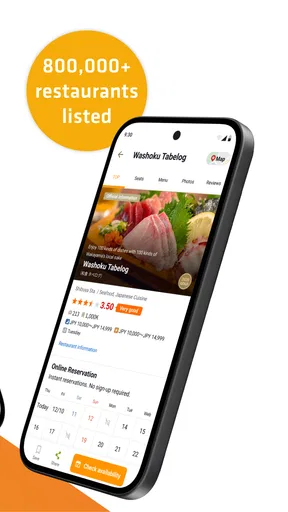
The app also offers detailed information on each restaurant. We're talking menus, photos, opening hours, and even links to the restaurant's website. It's like having a dining encyclopedia in your pocket. Plus, the user reviews are pretty spot on, giving you a realistic expectation before you walk in hungry and ready to eat.
Community and Trust
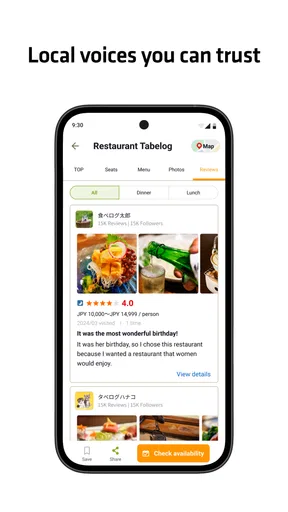
What I love about Tabelog is the community aspect. The reviews are written by locals and travelers alike, providing a diverse range of opinions. This is crucial because it means you're getting a well-rounded view. The rating system is straightforward, and restaurants are ranked on a scale, making it easy to see which spots are a must-visit.
Also, the app encourages users to upload photos and share their experiences, which adds a layer of authenticity. I've discovered some incredible places thanks to the photos shared by other users. It's like having a sneak peek before you decide to dive in.
Personal Experience
During my last trip to Japan, I relied heavily on this app. One memorable find was a tiny ramen shop in Osaka. It wasn’t on any tourist list, but the rave reviews on Tabelog convinced me to give it a try. Spoiler alert: it was some of the best ramen I've ever had. The app made it easy to locate, and the user reviews were spot on about the flavor and ambiance.
Another cool experience was using the app to find a sushi bar in Tokyo. The chef’s omakase was a symphony of flavors. Again, I wouldn't have found it without Tabelog pointing me in the right direction.
Choosing it for the right kind of trip
I’d recommend it most to travelers who want more than the familiar restaurants clustered around major attractions. Local reviews and food photos can help me spot a promising neighborhood meal, while filters make it easier to turn a vague craving into a manageable shortlist. Someone planning a food-focused visit may get more out of that depth than a traveler who only needs the nearest quick bite and is happy to choose whatever appears first in a general map app.
A realistic use case is arriving in Osaka with an open evening and no fixed dinner reservation. I’d search around the hotel or the station where I expect to finish the day, narrow the results to a cuisine I’m in the mood for, and compare a few places rather than chasing the highest-ranked listing across town. I’d read comments for clues about atmosphere and check the photos for dishes that actually appeal to me. Then I’d keep a second option close by in case the first choice does not work out. The value is not just finding a restaurant; it is reducing the number of decisions I have to make while tired and hungry.
How it fits beside maps and travel guides
A general-purpose map is often quicker when the only question is “What is near me?” It is also useful for directions and getting a broad view of businesses nearby. Tabelog makes more sense when the question becomes “Which of these places is worth choosing for this particular meal?” Its restaurant focus, food-oriented filters, photos, and reviews can add context that a simple proximity search may not provide. I would still use a map for navigation and treat Tabelog as the more specialized layer for deciding where to eat.
Traditional travel guides have a different strength: they can offer a curated shortlist and background that is easier to read before a trip. Their weakness is that a fixed selection may not help much when I change neighborhoods or want something specific on the day. Tabelog is more useful for that flexible, in-the-moment search, though its larger choice can also create decision fatigue. My best approach is to use a guide for broad inspiration and the app to compare options near the place I will actually be.
Small choices that improve the result
One useful habit is to search by the meal I want rather than opening the most popular places first. A trending restaurant may be interesting, but popularity is not the same as convenience, value, or a match for tonight’s appetite. Filtering for a dish or cuisine gives me a more relevant starting set. I then compare location and practical details before I get attached to a restaurant based on one appealing photo.
I also look for agreement between different kinds of evidence. If several reviewers mention the same strength, and the photos support that impression, I have more confidence than I would from a single enthusiastic comment. If comments disagree, that is not automatically a reason to skip the place; it may mean the experience depends on what I order or what atmosphere I prefer. This is especially useful when choosing between a lively popular spot and a quieter meal where convenience matters more than novelty.
The trade-off is that detailed browsing takes time, and no review platform can make a restaurant decision perfectly objective. A high score cannot account for my budget, appetite, dietary needs, or tolerance for a long walk. I would not use a ranking as a substitute for checking the menu and location, and I would not assume that a restaurant’s listing answers every practical question. When a detail matters to the meal, checking directly with the restaurant is the safer choice.
Who may prefer another approach
If I wanted a simple, familiar answer with as little reading as possible, I might stick to a general map search or ask someone nearby. Tabelog is less compelling when I do not care about comparing restaurants, when my connection is unreliable at the moment I need to decide, or when I need a specific accessibility or dietary assurance that must be confirmed directly. It can help me discover candidates, but I would not rely on it alone for a requirement that could affect whether a meal is suitable.
It is also not the right tool for someone who prefers every stop to be booked and settled well ahead of time. In that case, I’d plan through the relevant restaurant’s own booking or contact channel and use Tabelog mainly for research. For a flexible traveler who enjoys choosing on the day, its discovery tools make more sense. For a tightly scheduled itinerary, I’d use it to inform the plan, then verify the essential arrangements separately.
Conclusion
In a nutshell, Tabelog - Food Guide in Japan is a must-have for anyone who loves food and is exploring Japan. It’s user-friendly, packed with reliable information, and helps you find delicious dining options no matter where you are. Whether you're a seasoned traveler or a first-time visitor, this app will enhance your culinary adventures.
So, if you’re ready to embark on a gastronomic journey, download Tabelog and let your taste buds lead the way! It's more than just an app, it's your personal guide to savoring the best of Japan.
My connectivity verdict
For me, the strongest reason to keep this app handy is that it brings restaurant discovery, local perspectives, and practical listing details together in a Japan-focused search. Its usefulness is greatest when I have enough connection to compare a few options and enough time to make a considered choice. It is less suited to an emergency search with no signal or to decisions that depend on details I need the restaurant to confirm.
I’d install it if I were preparing for a trip, curious about places beyond obvious tourist picks, or happy to explore food by neighborhood and dish. I’d pair it with a general map for getting around and direct restaurant checks for anything time-sensitive or important. Used that way, Tabelog can make choosing dinner feel more informed without pretending that an app can replace local circumstances or personal taste.
Pros
- Extensive restaurant database across Japan.
- User-friendly interface with easy navigation.
- Detailed reviews from local food enthusiasts.
- Customizable search filters for preferences.
- Offline access to saved restaurant info.
Cons
- Limited English content for some reviews.
- Occasional inaccuracies in location data.
- In-app ads can be intrusive at times.
- Account creation required for full features.
- No direct reservation option within app.
FAQs for Tabelog - Food Guide in Japan
What is Tabelog and how does it work?
Tabelog is a comprehensive food guide app designed to help users discover the best dining experiences in Japan. It offers restaurant reviews, ratings, and detailed information about menu offerings. Users can search for restaurants by location, cuisine, or popularity, and even make reservations directly through the app.
Is Tabelog available in English for non-Japanese speakers?
Yes, Tabelog offers an English version to cater to non-Japanese speakers. The app's interface and most restaurant details are translated, making it accessible for tourists and expatriates looking to explore Japan's culinary scene without any language barriers.
How reliable are the reviews and ratings on Tabelog?
Tabelog is known for its extensive user-generated reviews and ratings, which provide a broad spectrum of opinions. The app also uses an algorithm to weigh reviews, giving more credibility to experienced reviewers. This makes the ratings generally reliable, though users should consider multiple sources for a balanced view.
Can I make reservations through Tabelog?
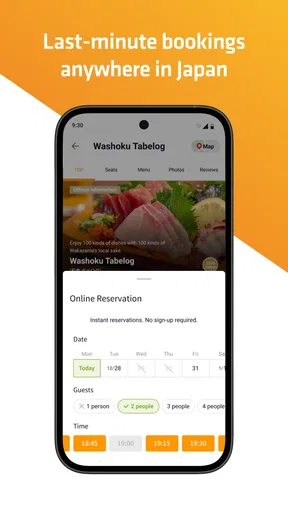
Yes, Tabelog offers a convenient reservation feature for many restaurants. Users can check availability and book a table directly within the app, streamlining the dining experience and reducing the hassle of making phone calls, especially if there's a language barrier.
Are there any costs associated with using Tabelog?
Downloading and using Tabelog is free, but some features, such as premium reviews or exclusive content, may require in-app purchases or a subscription. Users should review the app’s terms and conditions to understand any potential costs involved.


